
What is powder coating? Process, advantages, and applications.
What is powder coating? Powder coating is a method of applying a layer of powder paint to a metal surface using electrostatic attraction, then heating to melt the powder and create a strong bond with the surface. This technology is widely used in the production of metal products such as warehouse shelving, supermarket shelving, steel cabinets, steel doors, machine frames, tables, chairs, and industrial equipment. Compared to conventional painting, powder coating has a unique process and requires strict control from surface cleaning to drying, powder coating, and curing.
1. What is powder coating?
Powder coating is a painting method that uses dry powder paint instead of liquid solvent-based paint.
During the spraying process, the powder coating becomes electrically charged and adheres to the treated metal surface. The product is then placed in a drying oven at a suitable temperature to melt the powder particles, bond them together, and form a complete paint film.
This method is primarily used on materials that can withstand heat treatment, especially metals.
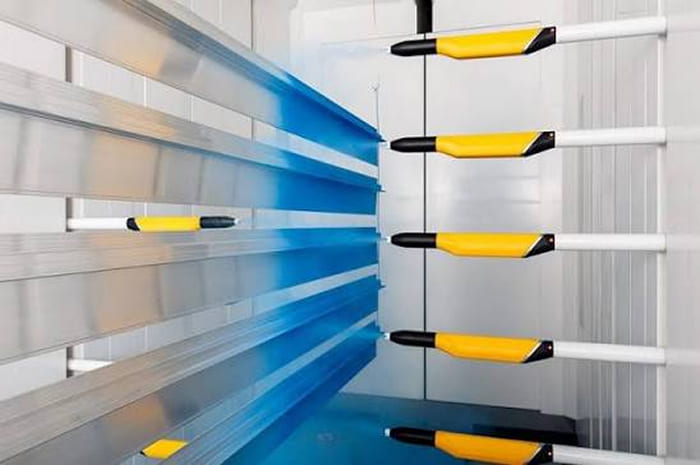
2. The operating principle of electrostatic powder coating
To understand what powder coating is, you need to grasp the following basic principles:
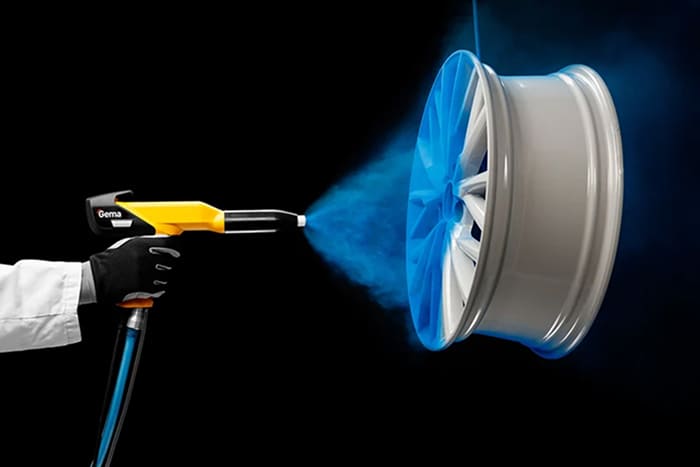
- Step 1 – Electrostatic charging: The powder paint is passed through an electrostatic spray gun, where the powder particles become electrically charged (usually positively).
- Step 2 – Electrostatic attraction: The metal material to be painted is grounded (negatively charged). When sprayed, the paint powder particles are strongly attracted to the metal surface due to electrostatic force.
- Step 3 – Film Formation: After spraying, the material is placed in a kiln where the paint powder melts and bonds to form a continuous, firmly adhering film.
Thanks to this principle, powder coating can penetrate into corners and crevices that conventional water-based paints have difficulty reaching.
3. What are the steps involved in the powder coating process?
A complete powder coating process typically involves the following main steps:
Surface treatment and cleaning
The metal surface must be cleaned of grease, dirt, rust, or other contaminants that could affect paint adhesion.
This is an important step because if the surface is not clean, the paint may not adhere evenly or may easily develop defects after a period of use.
Surface pretreatment
Depending on the production line and materials, the product may undergo chemical treatments to increase corrosion resistance and improve coating adhesion.
The product is then dried before being moved to the painting stage.
Powder coating
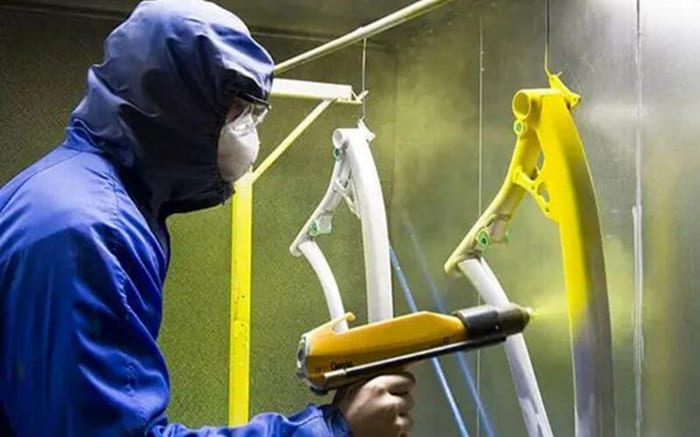
The powder coating is fed into a spray gun and electrically charged. When sprayed onto a grounded metal product, the powder particles adhere to the surface due to electrostatic attraction.
The thickness and uniformity of the powder coating need to be controlled to avoid it being too thick, too thin, or not covering the necessary areas. For steel structures such as medium-duty shelving , controlling the paint layer on the frame, beams, and connecting details helps to achieve a more uniform surface finish after curing.
Drying and curing
After spraying, the product is placed in a drying oven. The heat melts the paint powder, spreading it evenly across the surface before it hardens into a complete coating.
Drying temperature and time need to be controlled according to the type of powder coating and product requirements.
Inspect the finished product.
After the paint has set, the product is inspected for color, uniformity, adhesion, and surface defects before packaging or installation.
4. Outstanding advantages of powder coating
Compared to traditional painting methods, powder coating offers many superior advantages:
- High durability: The paint coating is hard, scratch-resistant, corrosion-resistant, and impact-resistant. This characteristic is particularly useful for products that are frequently subjected to impact during use, such as warehouse shelving , supermarket shelving, and steel storage equipment.
- Diverse colors: Many colors and effects can be mixed, including glossy, matte, textured, and glitter finishes…
- Environmentally friendly: Contains no toxic organic solvents and does not pollute the air.
- Cost savings: Powder coatings can be recovered and reused, reducing waste by up to 90%.
- Even coverage: The paint layer is smooth, without sagging or clumping.
- Fast construction time: Closed-loop process, high level of automation.
5. What is the difference between powder coating and regular painting?
| Criteria | Powder coating | Conventional liquid paint |
| Paint type | Dry powder | Liquid form |
| How to cover | Electrostatic powder spraying | Spray or brush paint |
| The finishing process | Heat, cure | Dry or cure depending on the type of paint |
| Coverage | High uniformity is possible. | Depending on the construction method |
| Color | Diversity | Diversity |
| Device | A specialized system is needed. | It could be simpler. |
| Application | Common in metal production | Very diverse |
6. One Tech Rack utilizes electrostatic powder coating technology in its shelving production.
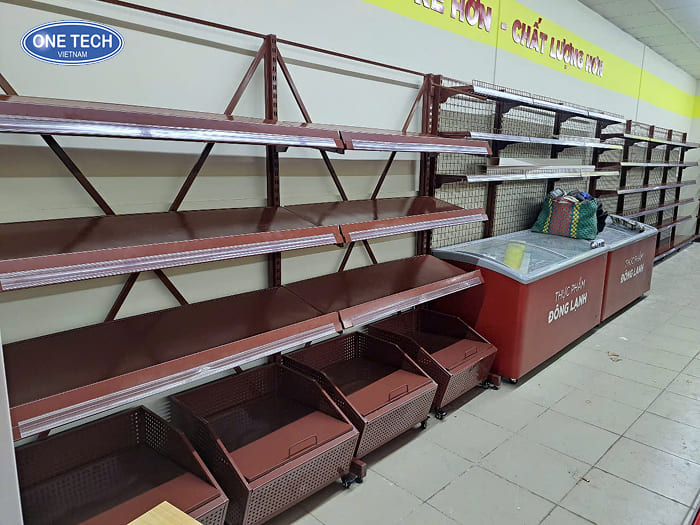
In the production of warehouse and supermarket shelving, One Tech Rack utilizes a surface treatment and powder coating process to finish the product before delivery to the site. The processes are carried out in a production line, from surface treatment and powder coating to curing.
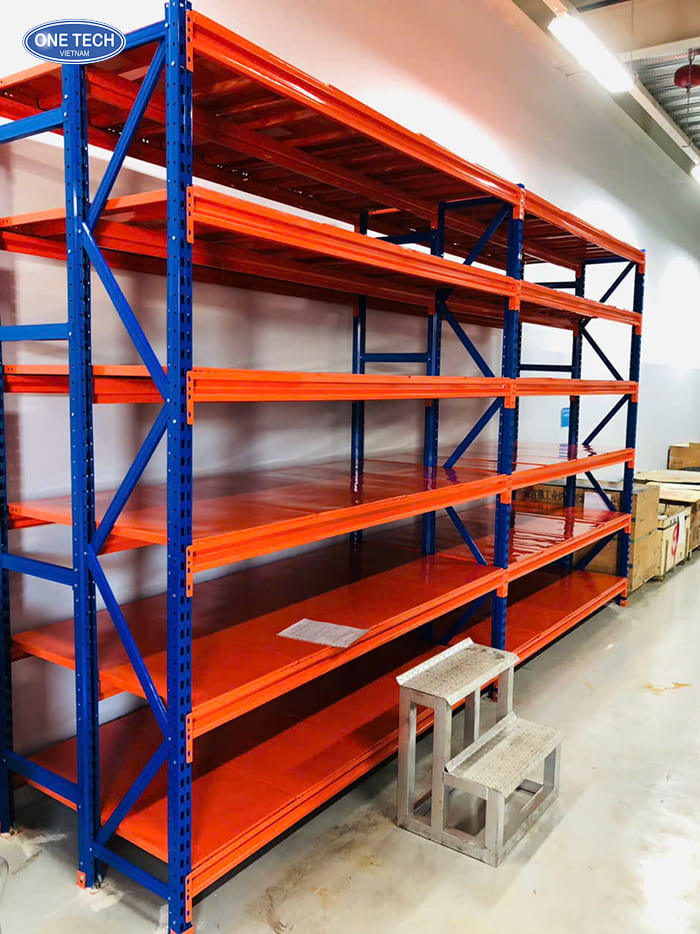
Coating control is implemented in conjunction with the size, structure, and load capacity requirements of each shelving line. This ensures greater product color and surface consistency when deploying large quantities for stores or warehouses.
Through this article, we hope you have gained a clear understanding of what powder coating is, its operating principles, process, advantages, disadvantages, and practical applications. It is a modern, durable, and environmentally friendly surface coating solution widely used in many industries.