
Forklifts used in warehouses are designed in various styles, load capacities, and operating mechanisms, meeting needs ranging from moving pallets on the floor to retrieving goods from racking systems tens of meters high. Choosing the right forklift not only reduces labor but also directly impacts the speed of goods handling, aisle space, and racking system design.
1. What is the role of forklifts in a warehouse?
In warehousing operations, forklifts handle many tasks that would be difficult for manual laborers to perform quickly and safely, especially when handling heavy goods or storing them at height.
Some common tasks include:
- Move pallets between the receiving, shipping, and storage areas.
- Lift the goods onto the higher shelves.
- Place pallets into or remove them from position on the shelf.
- Unloading goods from trucks and containers.
- Transporting raw materials between production stages.
- Assisting with picking, packing, and distributing goods.
In particular, in warehouses using pallet racking, forklifts and racks are almost two components of the same system. A change in the type of forklift can lead to changes in aisle width, shelf height, and usable space.
2. Common types of forklifts used in warehouses
2.1. Diesel Forklifts
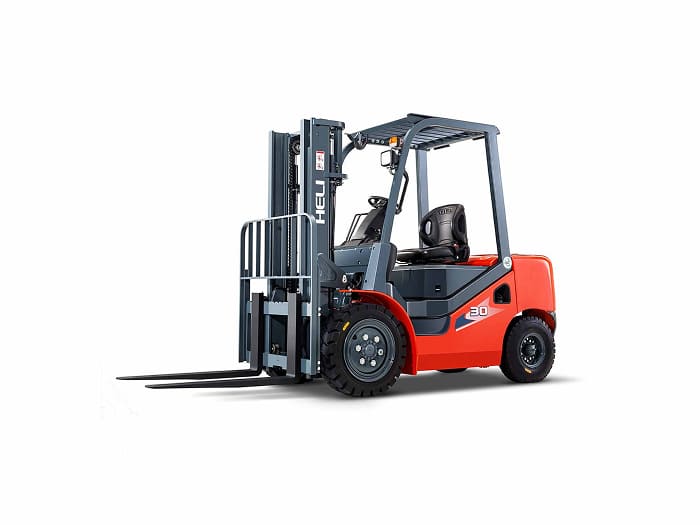
Diesel forklifts use diesel engines and are often chosen for jobs requiring high lifting capacity, continuous operation, or operation in outdoor environments.
This type of vehicle is suitable for factories, raw material yards, steel warehouses, construction material warehouses, or areas with good ventilation. Its ability to operate on various surfaces is also an advantage, especially for businesses that frequently need to move goods in and out between warehouses and production areas.
2.2. Electric forklifts
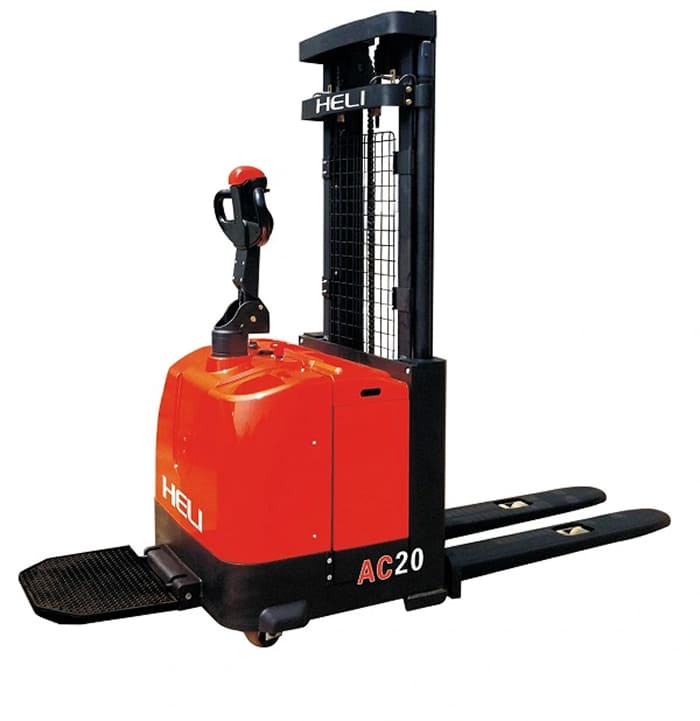
Electric forklifts use power from batteries, operate relatively quietly, and do not produce direct emissions during use. The absence of an internal combustion engine also helps to minimize the impact on the working environment inside the warehouse.
When choosing electric forklifts, businesses need to consider charging time, usage duration, and the layout of charging areas or battery replacement to ensure the forklift can handle the intensity of operation.
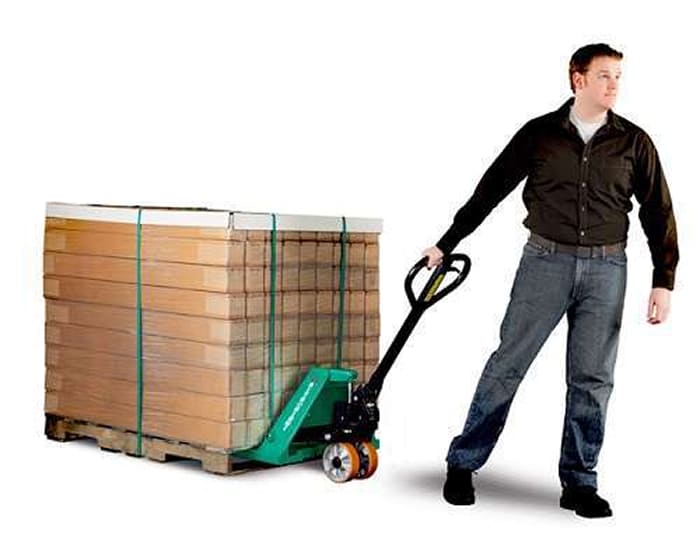
2.3. Hand pallet trucks
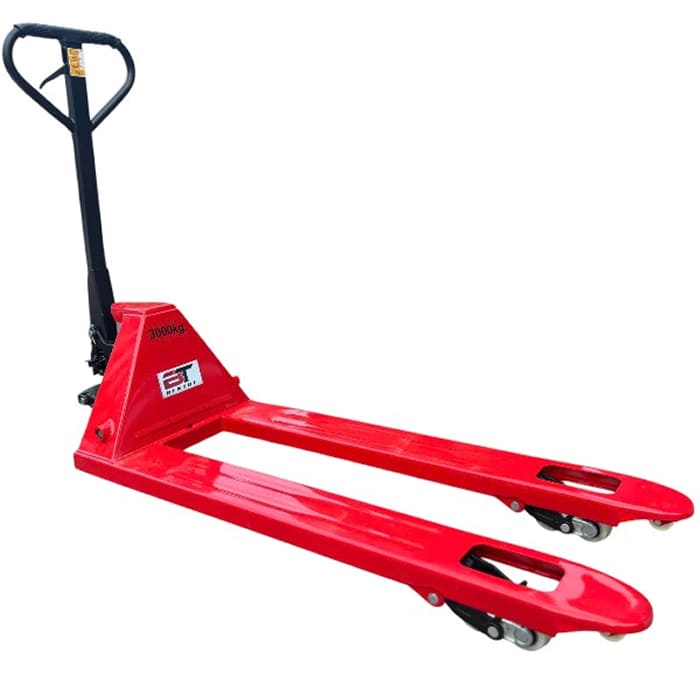
Hand pallet trucks have a simple structure and are primarily used for lifting pallets a short distance and moving goods on the floor. This is a suitable option with low investment costs and does not require a complex operating system.
However, hand pallet trucks are not suitable for lifting pallets to high shelves. If the warehouse starts using a multi-tier racking system , the business usually has to switch to a type of truck with a higher lifting capacity.
2.4. High-lift hand pallet trucks
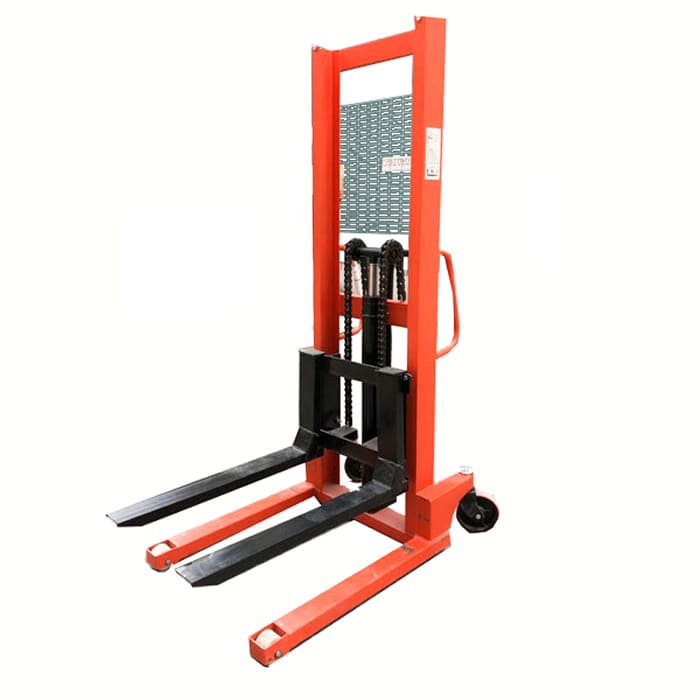
High-lift hand pallet trucks are an evolution of hand pallet trucks, but they are capable of lifting pallets to greater heights.
This type of forklift is suitable for medium-sized warehouses with moderate inventory levels and average storage height. It can be a transitional option when a business wants to utilize vertical space but doesn’t yet need to invest in electric forklifts or counterbalance forklifts.
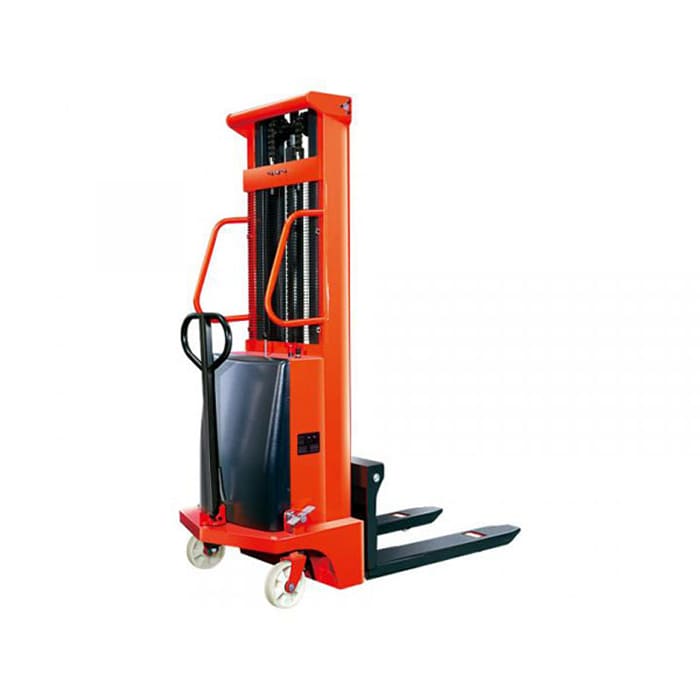
2.5. Semi-automatic electric forklift
Semi-automatic forklifts are assisted by electric motors for one or more operations such as lifting and lowering, while some movements still require manual control by the operator.
The advantage of this type of forklift is that it significantly reduces the need for manual labor compared to hand forklifts, while still maintaining a relatively compact design. It is typically suitable for warehouses with medium-volume loading and unloading, palletized goods, and lifting and lowering needs at moderate heights.
2.6. Reach Truck Forklift
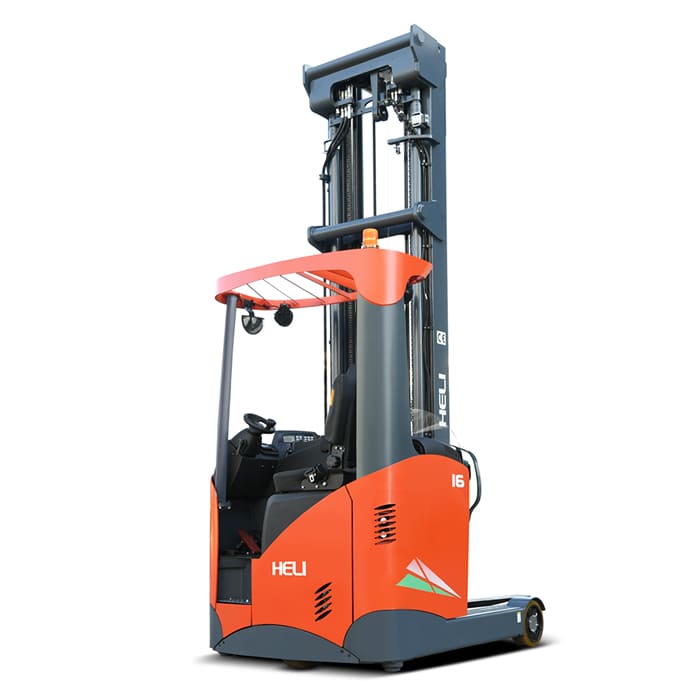
Reach trucks are a type of vehicle developed for high-rack warehouse environments, especially where aisle width needs to be reduced.
A notable feature of the Reach Truck is its lifting fork mechanism, which can extend into the pallet position, allowing the truck to deliver goods deep into the racking system without the truck body having to move too close.
Reach trucks are often used in conjunction with Selective and Double Deep racking systems, especially in distribution centers or warehouses requiring significant vertical storage.
2.7. VNA Forklift
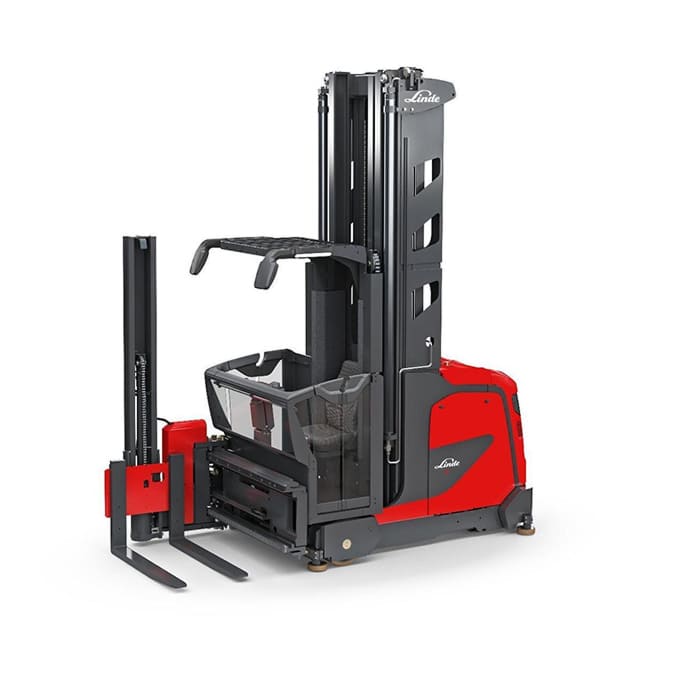
VNA stands for Very Narrow Aisle, meaning a forklift designed for very narrow aisles.
The vehicle is designed to work in high-rack systems with optimized spacing between rack rows, smaller than in warehouses using conventional forklifts. This allows businesses to dedicate more space to storage.
However, VNA requires a high degree of synchronization between forklifts, shelving, aisles, flooring, and warehouse height. Therefore, businesses need to plan for the application of this type of forklift right from the warehouse construction stage.
2.8. Order Picker Forklift
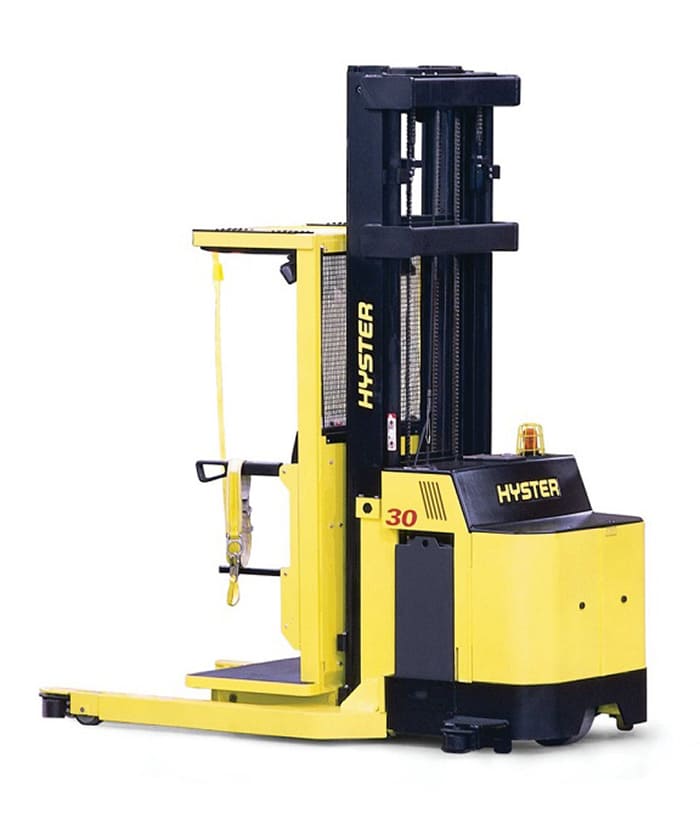
Order Pickers serve a different purpose: picking individual products or packages instead of moving entire pallets.
The cabin lifts the operator to a suitable height for retrieving goods from the shelves. This type of vehicle is particularly useful in warehouses with many small product codes, diverse orders, and frequent picking requirements. It’s a suitable solution for distribution centers, retail warehouses, or e-commerce warehouses with order processing procedures based on individual SKUs.
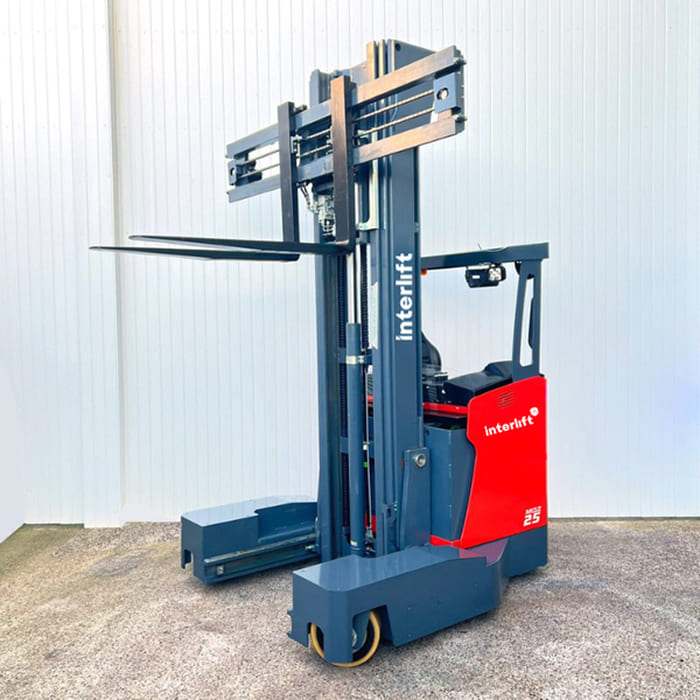
2.9. Multi-directional forklift
Omnidirectional forklifts are capable of moving in multiple directions, making them ideal for handling long loads that conventional forklifts struggle to maneuver.
Typical applications include structural steel, pipes, wood, aluminum bars, and other materials of considerable length. Instead of requiring a large turning space, the vehicle can change direction more flexibly within the storage area.
2.10. Forklift trucks
A tow truck, or tugger, doesn’t focus on lifting goods to a height but primarily on towing the carts or trailers behind it.
This type of vehicle is suitable for factories with production lines where raw materials need to be transported continuously between the warehouse and each stage of production. It is particularly useful when a business wants to organize its internal supply flow along fixed routes instead of using forklifts to move each pallet.
3. Criteria for choosing the right warehouse forklift
To avoid making the wrong purchases and wasting money, businesses should consider the following factors:
- Lifting capacity: Determine the maximum load weight, then add a 20–30% safety margin.
- Maximum lifting height: Must be compatible with the height of the highest shelf level in the warehouse.
- Aisle width: Narrow aisles require a reach truck or a compact electric forklift.
- Power source: Electric forklifts are recommended for enclosed warehouses; diesel forklifts can be used in outdoor yards.
- Types of goods: Standard palletized goods, rolled goods, and oversized/heavy goods all require different types of lifting forks.
- Warehouse floor conditions: Whether the concrete floor is flat or uneven affects the type of wheels and mobility.
- Long-term operating costs: These include batteries, oil, routine maintenance, and equipment lifespan.
Forklifts in warehouses don’t differ simply in engine or lifting capacity. Therefore, forklift selection should be considered in the overall context of goods – pallets – shelving – aisles – storage height – and operational processes. When these factors are designed in a coordinated manner, the forklift will truly fulfill its role and help the warehouse operate faster, safer, and more efficiently.