
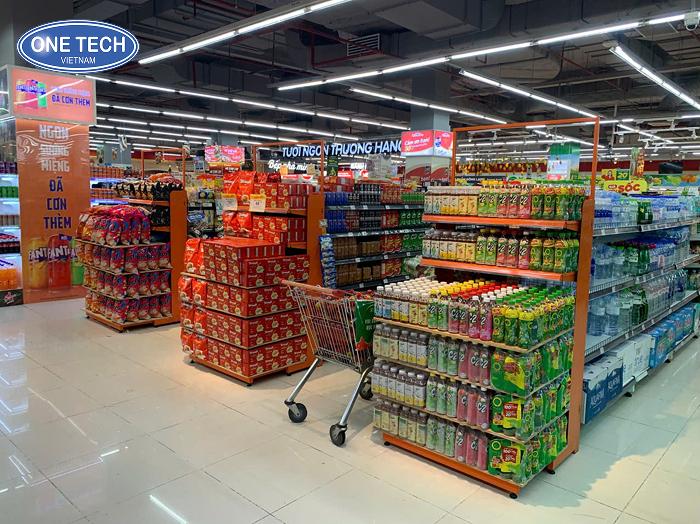
Grocery store shelving isn't a matter of "putting items anywhere, as long as there's merchandise to sell." It's an art form that combines customer psychology, spatial logic, and practical business strategy. From placing the right items on the right shelves and arranging related products together to utilizing the checkout area effectively – every small detail can contribute to your end-of-day sales.
1. Basic principles of grocery store shelf display
Before delving into specific grocery shelf display strategies, you need to understand three fundamental principles that will guide all your merchandise arrangement decisions.
Classify goods by group.
Group products by type and function together. For example, the dry goods section, the spice section, the personal care section, the cleaning solutions section, etc. This makes it easier for customers to find and compare products, saving them time searching.
FIFO (First-In, First-Out) principle
FIFO (First-In, First-Out) is a mandatory rule to prevent expired goods from accumulating on grocery store shelves . Each time new stock arrives, store owners move the old items to the front and place the new ones behind. It sounds simple, but many store owners overlook this, leading to a loss of credibility when customers buy products nearing their expiration date, and quickly losing loyal customers.
Display at eye level
A height of 1.5-1.7m above the floor is the first and longest-standing eye level for customers. Reserve this position for high-margin products, items you want to boost sales for, or newly launched products that need increased brand awareness.
2. How to display groceries on shelves scientifically and optimize space.
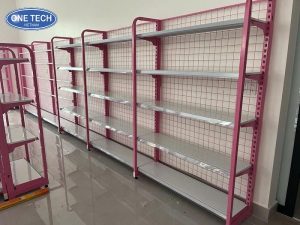
2.1. Wall-mounted shelves (Single shelves)
Single-shelf supermarket shelving against the wall is the most common type of shelving in grocery stores. The core principle to follow is "heavy items at the bottom, light items at the top": the bottom shelf should be reserved for heavy, bulky items to ensure the safety and stability of the shelving.
Meanwhile, the top floor is suitable for lightweight, low-selling products or seasonal stock, keeping the main display area uncluttered and focused on best-selling items.
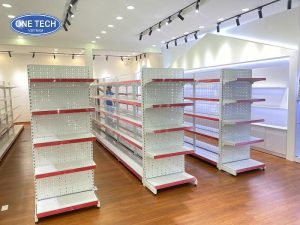
2.2. Center shelf (Double shelf)
Double-sided shelving in the middle of the store is best suited for displaying fast-moving consumer goods, snacks, confectionery, instant noodles, and small packaged drinks.
Important note: The center shelf should not be higher than 1.4m – 1.5m to avoid obstructing the shop owner's view of the entire store – this is both convenient for monitoring and helps deter petty theft.
2.3. Endcap Shelf
The end of each shelf aisle always has the highest foot traffic. Take advantage of this location to:
- Display discounted items with prominent price tags.
- Introducing a new product for rapid brand recognition.
- Seasonal items are in line for specific occasions: mooncakes in August and September, candies and preserves before Tet (Lunar New Year), sunscreen in the summer…
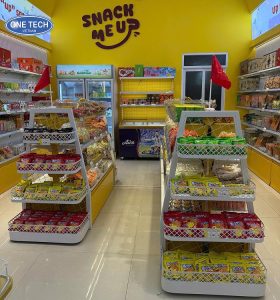
2.4. Hanging shelves
This type of shelving is extremely suitable for small, lightweight goods with pre-drilled hanging holes, such as hair ties, keychains, batteries, small packets of tissues, plastic bags, rubber bands, etc. Supermarket shelving with hanging hooks allows you to make full use of empty wall space, pillars, or the outer surface of the main shelves, transforming empty areas into display spaces that generate real revenue.
2.5. Arrange related products side by side.
The principle is simple: place frequently used items together to encourage customers to buy more. Some classic pairings in grocery stores include:
- Instant noodles – chili sauce – sausage/pork sausage
- Toothbrush – toothpaste – mouthwash
- Body wash – shampoo – conditioner
- Ground/pouch coffee – sugar – condensed milk
- Bread (if available) – butter – jam/pate
Put yourself in the customer's shoes. When they buy a toothbrush, they certainly need toothpaste as well. When they choose instant noodles, it's convenient to have chili sauce or sausage right next to it.
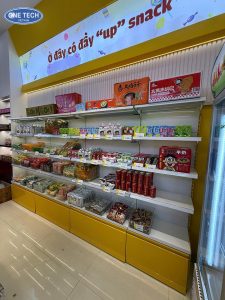
2.6. Payment Area (Impulse Buying)
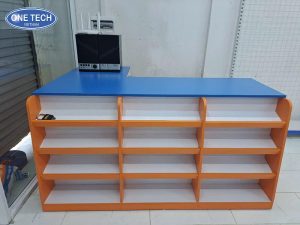
The checkout area is the last point before customers leave, but it's an unmissable sales opportunity. While waiting to pay or getting their money back, customers are easily tempted by small, inexpensive items displayed right in front of them, such as chewing gum, chocolate, soft drinks, lighters, etc.
2.7. Make the most of color.
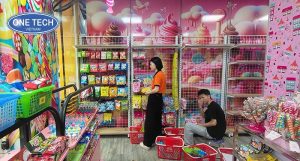
A shelf arranged in a color scheme looks better, more professional, and… sells more. The human brain reacts very quickly to color — a harmonious shelf creates the feeling of a reputable, clean, and trustworthy store.
There are two possible ways to sort them:
- According to the brand: Group all products of a single brand together – Unilever in one corner, P&G in another. This helps loyal customers find what they're looking for more quickly.
- Based on packaging color scheme: Order items with similar or closely related colors. A blue and white set of household items looks much neater and cleaner than a mix of colors.
3. Other considerations when organizing a grocery store.
Use shelves of appropriate height: For example, use 1.8m high shelves against the wall to utilize vertical space, but use 1.2m – 1.5m high shelves in the middle of the store so as not to obstruct the view of the entire store.
Clear aisles: Ensure aisles are at least 60-90cm wide to allow customers to move comfortably (especially if they have shopping carts/baskets).
Lighting: Ensure all corners of the shelves are well-lit, avoiding dark corners that might discourage customers from entering.
Always keep your shelves well-stocked: Empty shelves give the impression that the store is about to close or is running out of stock. Push the merchandise all the way to the edge of the shelves.
Clearly display prices: Customers are reluctant to ask for prices, and the lack of price tags can cause them to overlook the product.
Regular cleaning: Display shelves and merchandise must always be free of dust. (White shelves show dust easily but create a clean look, while black shelves give a luxurious feel).
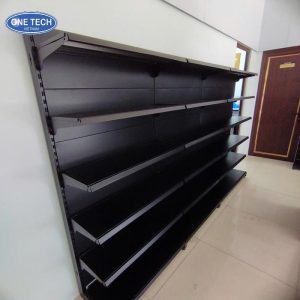
4. One Tech Shelving – Supplying grocery store shelving and setting up stores from A to Z
Understanding these concerns, One Tech shelving was created with the mission of providing comprehensive display solutions, helping grocery store owners like you confidently operate and grow.
From small retail stores and budget-friendly grocery shops to modern mini-supermarkets, One Tech offers a full range of retail equipment, including display shelves, cash registers, receipt printers, shopping carts, plastic shopping baskets, and countless accompanying accessories. All are manufactured from high-quality steel with a rust-resistant powder coating, ensuring durability and long-lasting performance.
We listen to your needs, budget, and desired style, then conduct an on-site survey and provide a free 3D design drawing, helping you visualize the future look of your store before construction begins.
One Tech shelving systems boast a team of highly experienced technicians, ensuring fast, efficient, and on-schedule installation. One Tech will handle everything for you, from surveying, consulting, designing, manufacturing, transporting, and installing to displaying sample merchandise.
Customer satisfaction is One Tech's top priority. We offer a long-term, clear warranty for each product. Contact us today for a free consultation.
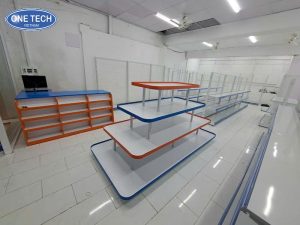
Arranging grocery store shelves isn't difficult; by applying the principles and tips above, you can not only optimize space and create a comfortable, professional shopping environment, but most importantly, "activate" customers' purchasing potential, thereby increasing revenue sustainably.