

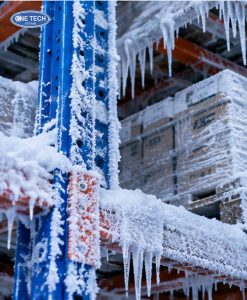
In cold storage environments, low temperatures and high humidity make condensation and freezing on shelves and surrounding areas unavoidable. If not handled properly, ice and frost can affect loading and unloading processes, shelf durability, and operational safety. So, what do experts recommend for effectively and minimally irritating frozen shelves in cold storage ? Refer to the helpful information shared below.
Reasons why shelves freeze up in cold storage.
- The humidity in the warehouse was too high, causing condensation and ice to form on the shelves.
- The frequent opening and closing of the cold storage doors allows outside moisture to constantly enter the storage area.
- The cooling system operates erratically, causing temperature fluctuations that promote condensation.
- The defrosting system malfunctioned, causing a growing layer of ice to accumulate on surfaces.
- Goods brought into the warehouse while still damp increase the amount of condensation inside.
- Poor air circulation in the warehouse leads to moisture concentration and localized freezing.
- Shelves and merchandise placed too close together or against the wall obstruct the flow of cold air.

What problems do frozen shelves in cold storage cause?
Freezing shelves not only affect storage capacity but also cause numerous inconveniences in cold storage operations. Specifically, this condition can lead to the following problems:
- This reduces the actual space and capacity of the warehouse, as ice and snow occupy storage space.
- It hinders the loading, unloading, and picking process, making operations more time-consuming.
- Increased risk of slips and falls, compromising safety while working, especially on warehouse floors and walkways.
- Accumulated ice and snow over time can corrode the surface of shelves, reducing the material's durability.
- This affects the load-bearing capacity and lifespan of the shelving system, especially when the shelves are corroded.
- This reduces the efficiency of cold air circulation, causing uneven temperatures between different areas within the warehouse.

Instructions for handling frozen shelves in a cold storage facility.
When ice buildup is detected on shelves, simply scraping off the outer layer of ice is insufficient. The cause should be identified, and the warehouse's operating parameters checked. The remediation process should be carried out step-by-step to both remove the ice and prevent re-freezing.
Step 1: Check and determine the level of freezing.
First, inspect the entire shelving area, from the support posts, shelves, and product placement to the aisles and areas near the cooling unit. Note the location, thickness, and extent of ice and frost, and check whether the ice is localized or widespread to pinpoint the cause.
Step 2: Check the operating parameters of the cold storage.
Check the temperature, humidity, time and frequency of warehouse door openings, and monitor the operating condition of the refrigeration unit, fans, and defrosting system. These parameters should be compared with the set levels and goods storage requirements to identify any abnormalities.
Step 3: Identify the cause before proceeding with defrosting.
If ice appears excessively around the evaporator coils, shelf bases, or warehouse door area, the specific cause needs to be identified instead of just treating the ice on the outside. If it's related to the refrigeration system, defrosting, or humidity, the cause should be addressed first to prevent further ice formation.
Step 4: Proceed with defrosting according to the correct procedure.
Follow the cold storage system's operating instructions for defrosting, and monitor the defrosting time, temperature inside the warehouse, and the amount of water remaining after the ice melts. Do not use sharp objects, direct heat, or excessive force to defrost, as this may damage the shelves and equipment.

Step 5: Clean, drain, and dry the shelf area.
After the ice has completely melted, collect the water, clean the shelf surfaces, and check for areas at risk of moisture accumulation. Pay particular attention to the support legs, joints, shelves, and protective paint coating to detect early signs of peeling, rust, or corrosion.
Step 6: Check the condition and load-bearing capacity of the shelves.
Inspect the straightness of the uprights, the deflection of the shelves, the connections between the components, and the condition of the shelf anchors. If any bending, tilting, deformation, or severe corrosion is detected, stop loading at that location and conduct inspection and repair before resuming use.
Step 7: Recheck the temperature and humidity after processing.
After defrosting and cleaning are complete, monitor the temperature, humidity, and cold air circulation in the warehouse. Only return goods when the parameters have stabilized and there is no longer any unusual ice formation.
Step 8: Monitor and prevent refreezing.
After defrosting, the defrosting time, temperature, humidity, and ice condition should be recorded for monitoring in each cycle. If ice quickly reappears, a more thorough inspection of the refrigeration system, warehouse doors, and the arrangement of shelves, goods, and cold air flow is necessary instead of continuing with manual defrosting.

Things to note when handling frozen shelves in cold storage.
To ensure the ice removal process is safe and does not affect the shelf structure, operators need to pay attention to the following important issues:
- Prioritize worker safety, provide adequate protective equipment, and inspect working conditions before handling any work.
- Do not use fire or inappropriate heat sources to melt ice, as this may damage equipment and create a fire hazard.
- Do not use sharp metal tools to tap or pry the ice, as the force of the impact may scratch or deform the shelf surface.
- Do not continue loading goods if the shelves show signs of bending, tilting, or deformation; check the load capacity before reusing them.
- If unusual or recurring freezing occurs, the refrigeration system, humidity levels, and defrosting should be checked to address the root cause.
What type of cold storage shelving should be chosen to minimize the impact of the cold environment?
Cold storage facilities are characterized by low temperatures, high humidity, and the risk of condensation and freezing, making it difficult to completely eliminate these effects. Therefore, in addition to controlling operating conditions, selecting a suitable racking system is crucial to ensure durability, load-bearing capacity, and safety throughout the entire usage process.
- Selecting materials and coatings suitable for the cold storage environment: Use materials with stable mechanical strength at low temperatures, combined with appropriate surface treatments to minimize oxidation, peeling, and the effects of moisture in the warehouse.
- Choose the appropriate shelving load capacity for your goods: Shelving load capacity needs to be calculated based on the weight of the goods, the number of levels, the loading and unloading method, and the frequency of loading and unloading. Selecting the correct load capacity helps minimize deformation and ensures safe operation.
- Design appropriate dimensions and number of shelves: Shelving dimensions must be compatible with the area, clear height, and specifications of the goods, while also ensuring the necessary working distance for forklifts, personnel, and the loading and unloading process.
- Prioritize shelving systems that optimize airflow and warehouse space: The configuration and placement of shelving units need to be carefully calculated to avoid obstructing airflow from the refrigeration system, while maintaining appropriate distances from walls, ceilings, and cooling units for even heat distribution.
Therefore, businesses looking for high-quality cold storage racking systems should contact One Tech Rack immediately.